O světě, který tu je i není - o věcech výjimečných i banálních, podivuhodných i trapných, temných i oslnivých, tristních i směšných, paradoxních i logických, stejně tak však i o věcech temně zářících, tragikomických, podivuhodně banálních, výjimečně trapných či zcela logicky paradoxních. A o sobě, který tu je i není stejně tak.

Zobrazují se příspěvky se štítkemInterviews. Zobrazit všechny příspěvky

úterý 23. ledna 2018

Básně o lásce a vínu (rozhovor pro magazín Full Moon)

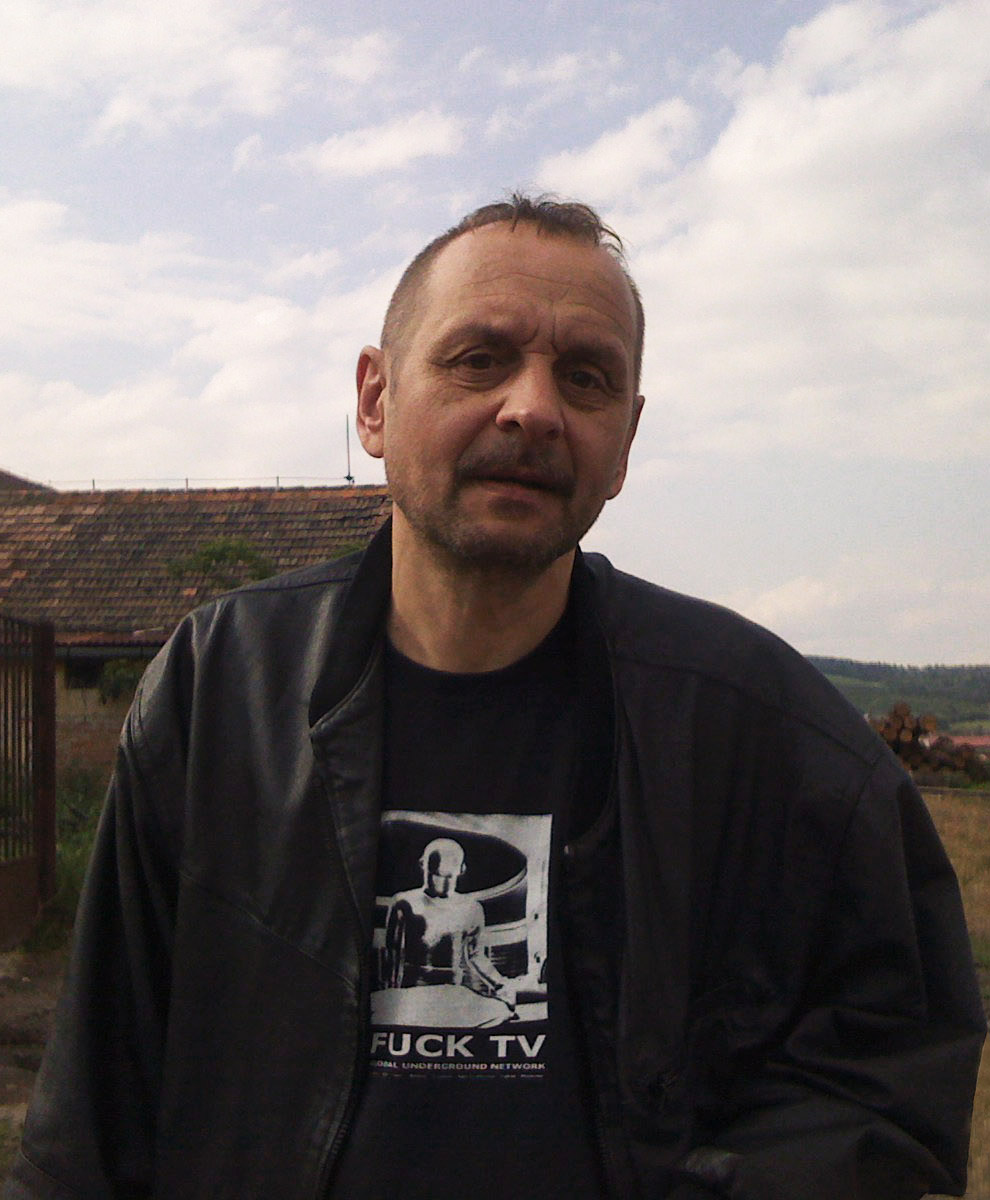
Začínal s postpunkem, jeho hudební pouť ale záhy zamířila docela jinam. Už v počátcích 90. let minulého století se jméno Vladimír Hirsch stalo pevnou a významnou součástí naší a potažmo i evropské elektronické hudby. V Praze usazený skladatel a lékař zatím vydal více jak třicet alb, ať již sólových nebo jako člen souborů Der Marabu, Skrol, Aghiatrias a dalších. Je připomínán jako muž, který vynalezl pojem integrovaná hudba, půdorys, na němž plynule a originálně propojuje vlivy industriálu, dark ambientu a klasiky. Hudební a skladatelské rozpětí Vladimíra Hirsche je ale mnohem širší, jak ostatně napoví i následující rozhovor, vzniknuvší nedlouho před vydáním nové desky jednoho z jeho projektů Subpop Squeeze.


Projekt Subpop Squeeze je popisován jako zábavnější tvář vaší produkce. Znamená to, že si sem chodíte odpočinout a pročistit hlavu od hudebně těžších témat?

I tak se to dá říci, současně je to však odraz skutečnosti, že rockové principy jsou mi stále blízké a potřebuji se v nich občas pohybovat, jakkoli se o nich dá nejspíše mluvit jen v širších obrysech tohoto typu mé tvorby. Od roku 1996, kdy jsem projekt zavedl, a to spíše jako studiovou alternativu, jsem mu věnoval pozornost jen velmi okrajově a téměř patnáct let na něj nepomyslel. Až v poslední době – poněkud přesycen standardní koncertní produkcí – jsem se rozhodl ho reanimovat, a to tak, aby ho bylo možné prezentovat živě, měl souvislost s ostatní tvorbou a byl něčím víc než odpočinkovou boční kreací.

Vaše alba často vznikají na základě určitého konceptu či tématu. U novinky nazvané Anacreontics je to stejné, nebo jde o volnou kolekci skladeb?

Volné kolekce skladeb mi nejsou vlastní, album obyčejně považuji svým způsobem za jedinou skladbu, kde její jednotlivé části korespondují nejen způsobem práce, jak je obvyklé, ale též tematicky. Dosti často jde o příběh, celek epického charakteru, ale v tomto konkrétním případě tomu tak není a stmelujícím faktorem jsou ironizující parafráze témat inspirovaných zapomenutým antickým žánrem básní o lásce a vínu.

Už při domlouvání rozhovoru jste zmiňoval důležitou roli producenta Toma Saivona. V čem by deska Anacreontics byla jiná, nebýt jeho přítomnosti?

Tom Saivon se věnuje především dramaturgii a zvuku. Několik skladeb vzniklo na jeho popud s cílem oživit kolekci a dát věci v rámci tématu větší rozmanitost a co nejdynamičtejší průběh. Nejsem přítelem žánrových šuplíků, ale líbí se mi Tomova charakteristika alba coby „electro-industrial-thrash metal synthesis“, kde podíl kytarové složky – jakkoli více či méně zvukově manipulované – lze částečně považovat za výsledek jeho vlivu.

Tom Saivon byl producentem už několika vašich alb, léta s vámi hraje v souboru Skrol. Na jedné straně to přináší výhodu vzájemné důvěry, znáte se, víte, co jeden od druhé čekat. Dokážete se ale zároveň ubránit tomu, aby spolupráci neohrožoval stereotyp?

Naše přístupy nejsou a nikdy nebyly stejné, jakkoli mezi námi panuje důvěra. Názor producenta je proto a priori pohledem z jiného úhlu, čímž mě, který je zcela ponořen do věci, poskytuje odstup, možnost vidět věc zvenčí, objevit a revidovat zmíněné zažité stereotypy a třeba i nabídnout alternativní řešení konkrétní problematiky. V zásadě ke každému novému albu přistupujeme s cílem dosáhnout co nejsilnějšího výsledku v rámci podstaty sdělení. Jakkoli mnohdy na základě ostré konfrontace obyčejně dojdeme k řešení, které jsme oba schopni přijmout za své, aniž bychom ho museli považovat za mechanický kompromis. To je právě věc, které si na této spolupráci cením nejvíce.

Máte za sebou desítky let komponování a nahrávání a roli producenta nezpochybňujete, na druhou stranu část vaší produkce se obejde i bez něj. Co je klíčem k rozhodnutí, kdy je přítomnost producenta žádoucí a kdy nikoli?

Producent bývá často jakýmsi médiem komerční úspěšnosti desky, což u nás v úvahu nepřipadá. Obejdu se bez něj v té části tvorby, která se pohybuje v užší sféře soudobé klasické hudby. Čím více produkt směřuje k integrované, eventuálně výrazněji elektronické, industriální či podobné zvukové charakteristice, je producentova role významnější. Je to dáno jeho zaměřením, postupy klasické hudby mu nejsou blízké. To ovšem neznamená, že by se orientoval jen na uvedené formy, jde nám o celkově homogenní a přesvědčivou podobu výsledného tvaru, a tomu je vše podřízeno.

Se Subpop Squeeze jste v posledních měsících několikrát vystoupil i živě. Budete v tom pokračovat? 

Jako Subpop Squeeze vystupuji od prosince 2014, a jak vznikalo nové album, měnil jsem postupně i příslušný koncertní program výměnou starších skladeb za nové. V současné době bych rád živě představil jeho finální podobu, přičemž plánujeme vystoupení v Polsku a Německu a možná i v dalších evropských zemích, která jsou v jednání.

Mezi kultovní soubory, které jste založil, patří také Skrol. Jak vypadá jeho současnost či možná budoucnost?

Soubor Skrol sice oficiálně svou existenci neukončil, ale je dlouhodobě nečinný. Naposledy jsme vystupovali v letech 2011 a 2012, z čehož vzniklo živé minialbum. Máme sice dostatek materiálu, na kterém by se dalo pracovat, ale časová tíseň spolu s dalšími ryze praktickými důvody nám momentálně brání v konkrétních plánech, i když na koncertní produkci rozhodně nerezignujeme.

Ve Skrol hraje důležitou roli zpěv Martiny Sanollové, vokál přidáváte i vy sám, přitom velká část vaší další produkce je instrumentální...

I v mé sólové produkci, kde instrumentální složka hraje nejvýznamnější roli, není výjimkou užití vokálů, právě naopak. Někdy však měním pomocí technologií jejich zvukové vlastnosti natolik, že nejsou odečteny primárně jako vokální party. Nicméně má spolupráce s řadou vokalistů (či spíše vokalistek) význam úlohy lidského hlasu v hudbě potvrzuje. Užívám v mnoha případech i mluvené slovo, jak tomu je též na novém albu Subpop Squeeze. Řeč jako takovou považuji za hudební projev, její rytmika, tonalita a barva jsou pro mne svébytným prvkem a příspěvkem hudebního sdělení.

A jsou zpěvy a vokály při vzniku skladeb pro Skrol dominantní, nebo mají doprovázet a doplňovat instrumentální složku?

Všechny skladby Skrol vznikly na základě původní instrumentální báze, která v mnoha případech funguje i jako samostatná jednotka, některá alba mají své plně instrumentálními alternativy. Vokální složka Skrol tedy prakticky vždy následovala nástrojovou, ale nikoli s cílem ji pouze doprovázet. I když některé skladby Skrol nejsou opatřeny vokálním partem, v případě ostatních nemůže být pochyb o tom, že Martinin sytý, výrazně expresivní a emočně vypjatý projev nehraje pouze doplňující úlohu. Naopak, tyto skladby tvoří jakési jádro a nejpodstatnější části desky. Vždy se jedná o rozvinutí tématu, mnohdy vokální part přebírá částečně dominantní roli – nicméně cílem byla vždy komplexně kompaktní věc, bez ohledu na to, jakou úlohu ten či onen jednotlivý prvek hraje.

TECHNIKA MANIPULUJE

V přípravě je také vaše sólové album Scripta Soli. Jak jste daleko? 

Na aůbu "Scripta Soli" pracuji průběžně již dlouho. Jedná se o titul poměrně rozsáhlý, založený na práci s terénními nahrávkami, získávanými v průběhu několika let. Podstatou projektu je transformace, respektive muzikalizace původně zdánlivě nehudebního tvaru. Mělo by to být výrazně ambientní album, zcela jistě nejtišší z mých produktů, ale zdá se být také nejpracnějším. Vzhledem k tomu, že vyžaduje naprosto specifický typ práce i koncentrace, čekám na chvíli, kdy mi čas dovolí plně se mu věnovat. V současné době je zpracovaná asi polovina materiálu.

Hudebně zpracováváte vážná témata, důležitou roli hrají emoce, různé stránky lidského konání, historie a bytí, i náboženství. Elektronika i další nástroje mají ale i své zvukové hranice. Narážíte často na to, že musíte přistoupit ke kompromisu mezi představou, jak mají dané emoce či pocity v kompozici znít, a tím, jaké jsou dané technické možnosti?

Práce se zvukem je podstatou vertikálního členění skladby a skýtá nepřeberné množství řešení. Je ovšem třeba zdůraznit, že ani ty nejdokonalejší technické možnosti neposkytnou hudebníkovi komfort, vše je, respektive musí být, vedeno jím. Technologie je dobrý sluha, ale špatný pán. Buď jste to vy, kdo vládne, nebo jste sám manipulován. V tom případně sklapne dokonalá past. Stává se, že se mi nepodaří uskutečnit svou představu, ale vidím to jako vlastní nedokonalost, nikoli jako technický problém daný limitací nástrojových a přístrojových zdrojů zvuku. Nejsem jimi omezen, zdrojem či inspirací mohou být teoreticky jakékoli sluchové vjemy, jež nás obklopují.

Hudebník může zabřednout až do mikroskopicky důsledné práce na jediném zvuku či momentu – kdy poznáte, že toto je ideální a konečný stav a je možné pokračovat dál?

Preferuji komplexitu. Zvuková charakteristika, jakkoli pro mne podstatná a významná, není jediným atributem skladby. Vždy to chápu jako vztah detailu a celku. Najdu-li kompatibilitu, souzvuk a výpovědní autenticitu, mohu pokračovat dál.

Předpokládám, že jste nejen hudebník a skladatel, ale také posluchač. Co poslední dobou v hudbě nejvíce potěšilo Vladimíra Hirsche?

V poslední době mne hodně potěšilo, že byl konečně nahrán komplet všech symfonií mého oblíbeného skladatele Miloslava Kabeláče. Nejsem sice úplně nadšen ze některých provedení, ale byla tím zaplněna ostudná mezera v diskografii české moderní klasické hudby a jejích významných představitelů.

ROZHOVOR VLADIMÍR HIRSCH
TEXT RICHARD KUTĚJ
duben 2017

Vladimír Hirsch


úterý 3. května 2016

Interview for Last Day Deaf (Anastasia Andreadou, Christos Doukakis)

Vladimír Hirsch , the Czech composer, has developed his own aesthetics and unique style of music in the last 30 years. Being not afraid to experiment in order to create, he combines his classical studies and his journey through post-punk , industrial and dark ambient sounds. The result is a soulful new path in the universe of music. That’s the world of Vladimír Hirsch: unique and magic.......


Read more on

Vladimír Hirsch

Vladimír Hirsch , the Czech composer, has developed his own aesthetics and unique style of music in the last 30 years. Being not afraid to experiment in order to create, he combines his classical studies and his journey through post-punk , industrial and dark ambient sounds. The result is a soulful new path in the universe of music. That’s the world of Vladimír Hirsch: unique and magic.

Hello Vladimír, you are coming from Prague a historical city that is a famous tourist destination nowadays. Tell us few things about the Prague music scene and life over there in general.

Of course I love Prague, but the city as a popular holiday destination has an impact on the lives of its residents. The historical sites are overwhelmed by tourists and moving around the city to enjoy the beauty can get really annoying for the citizens. The music scene in Prague and the whole of Czechia [1] – at least  the one I have been active in so far without feeling like I belong to the same genre – is very small and fragmented, with hardly any labels interested in dark ambient or similar genres. The current situation cannot be compared to the 1990s and the verge of the century when activities in the field of avant-garde music flourished, above all thanks to the long existence of the international Prague Industrial Festival, organized by Ars Morta Universum platform, that is my colleagues from Skrol band, Tom Saivon and Martina Sanollová. They brought an amazing amount of musicians from around the world to Czechia and established a more concentrated artistic cooperation. The festival was not strictly “industrial”; it covered all kinds of avant-garde music. Unfortunately, it stopped for financial reasons.

Is it easier or harder being a musician in Czechia in comparison to being one in other countries?

As I mentioned before, being a musician in the field of “experimental” -I do not like this word because it implies something coincidental and I am certain that I know what I do- or avant-garde music in Czechia, is hard.

Listening to your works, one can find traces of industrial, classical, ambient, noise, experimental and even experimental jazz in some parts. Sometimes, your work would even bring to our mind the Greek composer Iannis Xenakis.  What are your influences then?

I do not like genre inclusion. However, I do understand the occasional necessity to simplify things to be able to work with words. My education is classical and I passed through several periods in my history with music- the standard classical music, experimental jazz or post-punk- before I found my own musical direction. I could write a very long paragraph of influences and a huge list of artists in general but will mention the names of those that really tempted me to do similar work. From music, I have always been attracted to the spiritual strength in the aching reality of the Czech composer Miloslav Kabeláč, the close encounters of space and detail of György Ligeti, the mathematical order in chaos of Iannis Xenakis that you mentioned, the ability to move in micro space of Giacinto Scelsi as well as the pure and sharp bone-penetrating or animate industrialism of SPK.

Tell us a few things about your musical past; you used to play in a post-punk band many years ago, right?

Yes, except for my solo works, I also have had several musical projects – the post-punk band Der Marabu in 1980s, the more or less neoclassical martial industrial Skrol, the dark ambient Aghiatrias, the dark electronic Subpop Squeeze, Luminar Ax and Tiria. In all of them, I have tried to develop other facets of music I am associated with, this or that way. I have been composing since I was a teenager, when – as a pianist and an organ player – I started to write classicist pieces with elements of experimental rock. In 1986, I joined the post-punk band Der Marabu and simultaneously started to apply modern classical forms to electronic music. This resulted in a more transgressive industrial style and the foundation of Skrol. It was the point when my idea of the so-called “integrated” musical form was born:  a transformation of modern classical and dark ambient, industrial and noise components into a homogenous indivisible structure.

Apart from your musical influences, what else inspires you to write music?

Music is the other eye to help me see and the stretched hand I use to search beyond. Can anything be more inspiring?

What other forms of art and which artists in particular inspire you?

My artistic philosophy or general visions were partially inspired by painting and literature: the renaissance and mainly modern abstract visual art, spiritually oriented artists, the metaphysical transformation in Mikuláš Medek’s paintings [2] above all. There are a lot of particular inspiration sources in both poetry and prose- Graham Greene’s salvation of the damned or Jorge Luis Borges’s imaginary worlds, for instance.

Being someone with a musical education, why did you choose to create in a more experimental field than to follow the path most composers do?

Above all, I am interested in searching my own expression, in finding cohesion within my personal philosophy, thoughts and feelings; simply being authentic. I do not want to repeat what has already been done, to live the life of somebody else. I am used to working in consecutive phases: idea, conception, creation. Ideas are elusive; they cannot be counted as a regular phase of work, yet they seem to be resulting from an inner continual process of search that has a life of its own. At the moment, when an idea is born in my consciousness, it remains there like some permanent question mark until the end of the work.

The name of your other project, Aghiatrias, is a collage of the Greek words ‘Aghia’ and ‘Trias’ meaning Holy Trinity. Are you religious? Is religion or spirituality in general amongst your influences?

Yes, you hit the target. I work with some philosophical principles, both consciously and, mostly, unconsciously. Those ideas result in a natural flow of expression. Spiritual insight is definitely my main inspiration, as are the themes of de-spiritualisation, materialistic decay and anthropocentrism of the modern human. This conflict represents metaphysically the central idea of my concept of “integrated music”, which consists in the collision and reconciliation of two seemingly spiritually opposite worlds inside of an individual.

Modern age, developing technology and music: What do you think that future will bring for music? In addition, for your last three albums, you preferred digital to physical format. Are you keeping track of the digital era? 

Technology, in general, has helped my musical aims a lot; it has extended the action potential for both means of expression and independence from other people which is very important for me. I am not a prophet, but, in my opinion, music, and not just it, has been stuck for a long time at an impasse. For reasons mentioned above, i.e. de-spiritualisation, the natural values have been quietly substituted by their holograms. The result is formal art without content. It is no fault of modern technology; everything can be misused. The crucial question is how much space we are willing to give to those cheap idols. In the case of my last albums, the reasons for digital releases were prosaic – the lack of publishers, because I am a bit too prolific. Of course, a physical release would have been much better.

You are returning to Greece a few months after your last performance. Is Athens an inspiring city? Are you looking forward for this masters’ reunion?

The cradle of European civilization is always an inspiring place. I thank you for the invitation I am definitely looking forward to it!


Anastasia Andreadou – Christos Doukakis

Ad [1] The name Czechia, although hardly ever used in the English-speaking world, dates back in the 19th century. In 14th April 2016 the country’s political leadership voted to register “Czechia” as the official English-language short name at the United Nations (Ed.).

Ad [2] Mikuláš Medek (1926-1974) was a Czech painter. With his abstract, surrealistic art, Medek, is considered among the most important exponents of the Czech modern painting in the post-war period (Ed.).


pátek 28. srpna 2015

Vladimír Hirsch - Rozhovor pro Aktuálně.cz

Aktuálně.cz - Vladimír Hirsch

Vladimír Hirsch - Aktuálně.cz 25.8.2015

V.Hirsch: Česko a Czechia? Nadčasový název země si zasloužíme. "Měli bychom vystupovat jako stálá značka, začněme třeba u hokejových dresů", říká skladatel Vladimír Hirsch, který bojuje za název Czechia. Iniciativa má prý podporu nejvyšších představitelů státu.

pondělí 23. června 2014

Heathen Harvest: INVOCATIO - Interview with Vladimír Hirsch by Clavdía Adimiron

Czech sound alchemist, Vladimír Hirsch, has been composing and experimenting with modern classical, dark ambient, and industrial music for over two decades. By using both electro-acoustic and digital techniques he is able to create fascinating scapes of aural expression. From the sacred union of these styles and their own intricate facets and dimensions emerges what Vladimír Hirsch calls INTEGRATED MUSIC, his living essence manifested.


Heathen Harvest:  Vladimir, what was life like growing up in a country in political turmoil such as Czechoslovakia, and how has this manifested through your art?

Vladimir Hirsch:  I grew up in a family which was “the enemy of the regime”, my father was imprisoned in a communist concentration camp, because he – as a lawyer – rejected to participate in the system of prosecuting opponents of the regime and was blamed on charges of conspiracy. Of course, all the persecutions we were exposed to would be a book of stories – and the character of the socio-pathological situation in our land participated in the formation of my artistic attitude at some point. For a very long time, all “suspected” cultural activities were prohibited and I was totally isolated and composed music only for my drawer. Only in my late years of prolonged agony under the communist regime, did I form a post-punk band and in 1987 played for the first time in public. It is necessary to say I have never been a songwriter of protest songs. All the time, I have been focusing on, more or less existential themes that I consider as the only substantial exploration.

However, it was really hard to live in that Orwellian State, on the other hand, it served as an overwhelming experience of how grand human decay can be expressed. If some concrete political consequences of the former regime appeared somewhere in my music, I consider them as a superficial expression and out of my basic conception. In fact, there has not been any change in the quality of world politics since that time, only in tactics and in specific strategies of leading the herd. We live in a seemingly different environment, but it is a feigned democracy, with a sophisticated system of manipulation, subconsciously intoxicating human minds, conforming their style of life and values towards individualism and a diversion from spiritual understanding of being. The manipulators understand, that for their reign, it is not necessary to kill or pursue anyone these days. The natural hierarchy of values has been quietly substituted by their holograms. The result of that act, formal existence without content, leads to a significant loss of spirit and subsequently a loss of consciousness of that process. It is invisible and painless, so a lot of us do not feel any lack. This form seems to be more dangerous, because of its hidden character and easy acceptance of that status quo as a pleasant comfort. This desolating fact is what I want to show in some degree with my work by challenging the traditional templates of understanding: “positive” and “negative”, “beauty” and “ugliness”, etc.

HH:  Your art emanates some truly horrific sounds; wherein seems to dwell something otherworldly. Do you believe it‟s possible your art evokes the presence of something otherworldly?

VH:  I am glad you have that feeling. From my point of view, it is natural to long for “other worlds” – which means for me longing for the cognition of our real matrix. I admit – I am aware of their presence intensely in my mind, being at the same time absorbed by a mordant, overwhelming feeling of impossibility to genuinely reach them . I realize that there is no other path, than only to try to somehow transform our physical reality. That trial cannot be under way without a fight and pain, whether inner, silent, latent or blatant and violent. So, I attempt to realize that struggle in music with the belief that the music is able to be an authentic description and expression of that transubstantial act. This might be the reason why some listeners get a physical impact or accented “physical” sense from my music despite its spiritual themes. This confrontational style sounds probably maddening and horrific, but when I find myself in that transient “hyper state” of my own existence while creating music, I don´t feel any horror or joy, any positive or negative connotations, only some kind of awakening and relief from overcoming them. Therefore, I am very often surprised by some people’s descriptions of my music as bombastic, with dramatic gestures, I don’t consider them that way, I feel it as the epitome of the natural cognitive process.

HH:  What kind of effect would you like for your art to have on those who listen with intent?

VH:  Excellent question and an important one. Thank you. I have never received it. I would like to know myself what they imagine! I would like them to escape from the limitations of rationality, which seems to pervade everything, into another dimension. Music is able to explore and reveal a deeper underlying reality in contrast to the phenomenological world. Ideally, the audience would discover and open that space. But I must say, sometimes I am surprised by some reviewers descriptions. For example, my music has been referred to as devilish, dark and disturbing. However, for me it is the complete opposite, because the intent is a spiritual purgatory and the impact might feel like as an intense violent flooding. On the other hand, music is mightier than its creator, saying more than is even originally intended. It is the miracle of art. Simply, I would like them to open their subconsciousness.

HH:  At times ominous and nightmarish and at others solemn and beautiful; are these reflections two faces of the same phenomenon? Or do you view them as observations of two different currents of light (and dark?)

VH:  A permanent presence of inner feud is a basic attribute of our existence. This struggle seems to be something important. I am captured and fascinated by it and it serves as my main creative force. Therefore the mode of my musical expression often has a confrontational nature about it. Many of my works are abrasive and physical while somehow being solemn and contemplative simultaneously. For me, they make sense together because they arise from the same source, just like spirit and matter living together, fighting each other, but cannot be separated in our human world. There is something that reconciles both worlds, I feel music is that path which leads closer to that point.

It is impossible to see light – thus also to call it – without simultaneous existence of darkness. Its co-existence does not inevitably mean anything contradictory, if we had not constructed so many artificial antagonisms during our history. The dual nature of reality only appears to be dichotomous, when it is really of the same whole. We are able to create opposing attributes that are absolutely not in conflict. Sometimes we try to find our leading thread inside the labyrinth, sometimes we try to get rid of it by conscious or unconscious self-lobotomy, feeling unbearable discomfort from it. There is no easy escape from our oppositional-categorization prison we made paradoxically for ourselves.

HH:  While much of your music does not even contain lyrics, your art still remains immensely profound; what do you feel is the reason for this?

VH:  Usually I create music thematically, which represents for me some inner epic construction. Musical language is more abstract, its potential contains larger means of expression than words. There is also the danger that lyrics can mislead and overshadow the musical intent. That is why I use vocals and voices in my solo works only as a musical instrument. In rare cases I also use some lyrics, but allow them mostly to be submerged and purposely unclear. However, in my other projects, predominantly Skrol, the music has a more traditional song form and lyrics are more appropriate.

HH:  What do you feel is lacking from the majority of contemporary “art”, that it is without the sense of the profound?

VH:  Contemporary art bothers me the most by its formalism, the silent assent to loss of content, fear of authenticity, contempt for emotions, rejection of serious topics, dilettantism and an epidemic of some sort of primary manipulative intentions of creators. There is some unwritten agreement in the art of today, that it is not necessarily substantial to say anything, actually, the message – and especially a more profound one – should be avoided like an infectious illness or rejected with derision. Instead, it flows in the stream of purposive slickness and calculation of apprehension for targeted social or taste fashioned groups of people. I consider it as one of the logical results of gradual despiritualization.

HH:  The process of artistic creation is a very sacred thing; in what ways do you prepare yourself mentally, physically, emotionally, and spiritually before creating or performing?

VH:  I used to work in consecutive phases. Idea, conception, creation. Ideas are elusive, so I probably cannot count it as a phase of work, but it is usually some result of an inner continual searching process, that lives its own life. At the moment when it is found by my consciousness, it remains there like some permanent question until the end of the work. Anyway, I am never prepared. I am not the commander of those mechanisms and to say the truth, I don´t want to be. It would be a rape of spirit.

The preparation for performing depends on the character of the project. The Industrial audience is usually vociferous, used to a continual stream of noise. In my music, I work a lot with dynamics and the range of sound levels moves from discrete to extremely loud. In quiet passages, the loudness of the audience is very annoying and harming not only to music, but also my own ability to concentrate, so I am very happy when shows take place in churches or for example, a film festival, where people are naturally or instinctively immersed in the experience. In general, of course, I need to submerge and not be distracted. Such ideal venues and atmosphere are hardly ever-present, so I have unconsciously developed during the years some mechanisms which shield against distractions.

HH:  Your music is not only aural, but also very visual. What artists/artworks have inspired your compositions? (Painters, musicians, sculptors, etc..)

VH:  I could write a very large paragraph of influences and huge list of artists, but I will mention the names of those that really tempted me to work similarly. From music, I have always been attracted by the spiritual strength in the aching reality of Miloslav Kabeláč, close encounters of space and detail of György Ligeti, mathematical order in chaos of Iannis Xenakis, as well as pure and sharp bone-penetrating existentialism of Swans, the ability to move in microspace of Giacinto Scelsi or animate industrialism of SPK. In other art that inspired in some way my artistic philosophy or my general visions, I can mention the metaphysical transformation of pain in Mikuláš Medek’s paintings, Graham Greene’s salvation of the damned or Jorge Luis Borges’s authentic imaginary worlds in writing.

HH:  What role (if any) does philosophy play in your artistic expression? Spirituality?

VH:  Of course I work with some philosophical principles, both consciously and mostly unconsciously, which result in a natural flow of expression. Spiritual insight is definitely my main inspiration in music.

HH:  Do you work with any other mediums of artistry such as painting or writing poetry?

VH:  Yes, I had some short period years ago when I tried to paint. But painting did not express all I wanted as I had no formal training. I admit I do still like two of my paintings, but unfortunately I threw them out. I have written short stories for a very long time and also lyrics for my musical projects. I have some periods when I am inspired to write, but it is sporadic.

Vladimír Hirsch at Cross Club (Underlying Scapes)

HH:  In early 2012 you played some live performances in Berlin. How did those go?

VH:  It was at a Berlin film festival called Directors Lounge, and my performance was interesting because of the presence of an audience that normally would not appear at my shows. Whether I want it or not, one is always placed into some category. My music is not acceptably classical for the classical music milieu and for its classical aspect not too industrial, noise or dark ambient for people that usually listen to that stuff. But, only that second scene is able to accept my style, so, I usually play at industrial and similar concerts. The positive response was a pleasant surprise. The audience in Berlin was able to go behind the line of standard categorization, as the event was a film festival, so they behaved as if in the cinema, quiet and submerged. I performed the album ‘Underlying Scapes’ to Marianna Auster’s video collage, which was synced thematically to the music. We wanted to invoke an out-of-body-experience based on the confrontation between sound manipulation of subliminal structures of the brain and its transformation into an emotionally and surrealistically charged visual narrative.

HH:  Your live shows have been referred to as frightening and unsettling by some; is this the desired effect you have for your audience, or do you think this is merely a reflection of society’s inability to deal with such deep and thought-provoking emotions you express?

VH:  The second one, without doubts. I hope I make music as an authentic scan of my mind, expressing inner fights, doubts, dreams, nightmares, rages, etc., without any intent to mindlessly provoke.

Contemporary society is pathologically cultivating general blindness, being scared more from the loss of illusions and the loss of comfort, than from its own decline and fall. It is definitely losing its ability to solve problems, producing more and more sophisticated toys that generally help in invocating ignorance of reality. Therefore fear of that kind of music and inability to be confronted is rampant. Better to blame artists for cynicism, aggressiveness or malicious intent, while at the same time speaking cheaply about beauty and positivity, rather than seeing and facing all those things in the real world. I want listeners to awake from that facade. If we leave personal taste out of consideration, I understand somebody cannot deal with those feelings, which can be reflected in their own apprehensions and doubts. As such, I am scared more from optimism than despair.

HH:  „Graue Passion‟ stands out for me as one of your most powerful pieces of work. It is in my opinion true musical mastery. As I understand, it took several years to get its proper release. When listening to it today do you feel it is complete or do you wish to re-work it someday?

VH:  It was reworked several times, as I was not satisfied with the result for more than 7 years. Really strange, after those fully prepared conceptual trials, the project remained in my head like some nightmare. Paradoxically, “Graue Passion” is the result of one night’s revision, made spontaneously after a sudden, accidental impulse.

HH:  In 2001 you performed some exclusive concerts in the U.S. How was this experience for you, and do you have any plans or desire to return to the U.S. in the near future?

VH:  It was interesting in many ways, because of the many absolutely opposite feelings I received from the experience, from disgust to astonishing amazement that cannot be surpassed. Playing in the States cannot be so easily defined, as it really depended on the venue and state. Sometimes, I felt that the audience seemed standoffish, as if they have already heard it all before. However, I have never forgotten the show in Detroit, in the center of a totally dead district, where I had the same feelings I had reading Ray Bradbury´s “The Martian Chronicles”, where all inhabitants of some town died out and the main character is walking there in dry wind, that moves all artificially looking martian corpses, like fallen leaves down streets, expressing some definitive emptiness. With still five minutes before the show, there was not any person inside the hall, but during one short moment, it became full of people that disappeared after the show as quickly as they appeared. I went out and in the street only the sound of garbage was heard rolling in the wind. Surreal, unreal, incredible. Btw, it was one of the best shows I have ever had. The tour, was called “Fire Martyrs Tour”, with 16 concerts in 16 states in three weeks and over 6000 miles on the road. Doubtless, I would like to return back again, but with the possibility to choose places of performances.

HH:  Your newest work entitled “MISSA ARMATA. INVOCATIONES “was released in November 2012; could you tell us about it?

VH:  It is actually a new release of old stuff which has been reworked. “Missa Armata” is the original version of Mass. With the new version, I returned back to the first original, because of its strictness, considering it more authentic. “Invocations” is a reworked version conceived now as musical prayers. Both compositions share a common redemptive theme. Missa Armata is more noise-industrial oriented, while Invocationes compliments it with ritual dark-ambient.

HH:  Being a modern composer do you feel your music is understood and/or appreciated by people, or do you feel it is largely goes over the heads of most people?

VH:  In general, I think that overwhelming majority of people will switch off their media player after few seconds of listening, so, music is “going over their heads”, as you said, but without a chance to really get in. The standard reaction is “I am sorry, I cannot undergo it”. I realize that the inevitable fate of this kind of music is to stay on the margin of society. It is natural and I am reconciled with this fact. Once, some Czech reviewer wrote – probably from his own experience – that my music is either loved or hated, with always sophisticated reasons of respondents for one or the other – it never has an indifferent reaction.

HH:  When listening to your music, one can get the sense that it involves a particular transcendence from out of the pits of political, social, and religious dogmas, perhaps even one‟s own personal hell into a more enlightened and spiritual mature being. Are these the sort of themes you explore within your music?

VH:  Absolutely! You described it exactly in very enlightened way by your own question. I could not say it better, perfect definition.

HH:  You have been involved with other projects such as Skrol, Luminar Ax, and Aghiatrias at different points throughout your career. Do you prefer working in a collaborative environment with other creative individuals, or do you find greater fulfillment from working solo?

VH:  My investment in conjoint projects was always at the maximum and the overwhelming majority of them were based on my solo works. All those cooperations were usually in the beginning inspiring and a connection of people and their creative effort, constituting some interesting and original potential, but I can say without any pretension, that I have preferred working independently for many years, because I can freely realize my intentions, without any external intervention. On the other hand, I still enjoy performing on stage with a conjoint project much more than solo concerts. The connection between people on the stage is something unique, when you are metaphorically making some part of the building rise to a transcending space with another person(s).

HH:  Moving away from music for a moment, I know that you practiced as a physician during the 1990‟s. Were you still creating music at this point, or was your focus on your medical career?

VH:  I always considered myself as a worker in the medical field and had never had any ambition to make a career from it, feeling that work as a duty with a granted social sense and even sometimes enjoying it for the same reason. I was always making music during those times; however being a physician was time- consuming and exhausting, but I always needed to indulge in that creative space – I couldn’t and cannot live without it. Albeit, it is worth mentioning, that my job was sometimes very inspiring for musical creation in some way.

HH:  In 1999 you left the world of medicine; was this an effort to focus on your art once more? If so, what triggered your decision to leave such a prominent profession to return to the world of art?

VH:  I have always wanted to engage in music full-time, but it has not been realized. To create this kind of music is not compatible with the possibility to earn a living. In 1999, I got totally exhausted from my double life and my musical work started to be more and more demanding, therefore I decided to leave the medical world and change it for employment that allowed me to live without harming my musical aims.

HH:  In this day in age, it is increasingly more difficult to find an inspired work of art to shake us from this somnambulist state of being, your work being an obvious exception to this monotony. What have you found to be inspiring enough to share with world? What is it you are trying to express through your music?

VH:  As you know, from what I have already mentioned, there are not too many things that I consider inspiring in contemporary art, or maybe I have not come across them yet. Besides the artists I have already mentioned, I have drawn inspiration from some films – for example, the Czech director František Vláčil from the 60s and Tarkovsky, as they deal with a deep impact of spiritual questions inside an individual with amazing mastery of expression, poetic language, atmosphere and aesthetics. I also love Tarkovsky’s symbolism.

In my works, I have specifically been inspired for instance by Teologia Spiritualis Mystica, which is a description of the contemplative process for the purpose of higher cognition. This is used in the album Contemplatio Per Nexus, attempting to describe all steps of that process, which is apparent by the name of particular tracks. There is also somehow strange inspiration in Symphony No.4 (Graue Passion), from the lack of description the long period between the death and entombment of Christ. Originally I was inspired by Dostoevsky’s description of the painting of Hans Holbein, “Graue Passion.” He writes that it alone can shake the Christian faith in the Resurrection, because of the strong mortal portrayal of Christ’s dead body. 

HH:  Do you consider yourself a religious person?

VH:  Yes, I do, but I am not fully in accordance with institutional structures of religion. I consider spirituality as something strictly personal. I don’t like to speak about it as it can be heard in my music.

I think some my albums apparently give it away, e.g. “Graue Passion”, “Exorcisms” or “Contemplatio Per Nexus”, above mentioned “Missa armata” or “Invocationes”. Sometimes, I have to laugh reading some reviews, describing my stuff as diabolic or covertly devilish. This is exactly what I am talking about – superficial understanding of music as some assemblage of associated symbols with predetermined meaning and their inclusion into closed boxes with – once and for all – assigned categorization.

HH:  On your album „Exorcisms‟, the titles in Latin combined with the haunting aural soundscapes of the music, causes me to envision a purging. Much like the church will exorcise a demon, an exorcism of this kind casts out the church from one‟s self. Would this be an accurate interpretation of this piece? Please enlighten us…

VH:  Yes, exorcism is in general considered the religious practice of evicting malevolent spiritual entities from a person, but the name means also a prayer, used for the same purpose. This is the case in my album. I used there also some real names of those prayers, e.g. “Ecce Crux” (Behold the Cross) or “Averte! (Turn Away!) “

HH:  With that, I’d like to thank you for this candid interview, Vladimír. You can leave us with your choice of words.

VH:  Many thanks for the thoughtful questions, Clavdía. Music composition whether in a simple or sophisticated form, must exhibit a moment when all its springs merge into one powerful current that lifts Man above his being – an ecstatic eruption transporting us above ourselves. Solely this moment gives meaning to music and justifies its existence.


                                                                          Clavdia Admiron 

pátek 13. června 2014

Interview for Blizzard (2014)

Hello Vladimir! Let's talk about your musical work and your person. Do you have a musical education?

Yes, I was trained for more than ten years as an instrumentalist, piano and organ player. However, I was not a good pupil, I was focused more on being creative with the pieces rather than following the instructions of my teachers. I soon dropped my formal lessons. So in this sense, in regards to musical theory and composition, I am predominantly an autodidact. 

You are the musician behind SKROL, AGHIATRIAS, LUMINAR AX, TIRIA and VLADIMIR HIRSCH. What are the differences between these projects, are there musical parallels which exist between AGHIATRIAS and VLADIMIR HIRSCH?

The majority of the albums of Skrol and Aghiatrias were either transcriptions of my solo works or instrumental bases made especially for those projects. Given that fact, the parallels should be clearer. In all my projects I compose the music, while in Skrol and Aghiatrias, the creative and inspirational role is largely in collaboration with the other members in terms of sound sources, lyrics and production. Tom Saivon has been influential in both projects by contributing to the inspiration in sound, lyrics and direction. While, the singer Martina Sanollová in Skrol is the main cognitive sign of the band, with her passionate and ecstatic vocal expression, she extends the radius of the impact into a kind of trans-dimensional space. Particular projects have a specific direction, which is more pronounced depending on which you listen to, but all of them are based on the same broader musical concept. For example, Skrol is quite martial industrial with rock principles and a more structured song form, whereas the soundscape of Aghiatrias tends to be more abstract in its dark ambient-industrial organization.Taken together though, the unifying element in both of them is in the compositional system, which reflects my direction in contemporary classical orientation. My other side projects, like the noise-industrial branch Zygote, the dark ambient-electronic Luminar Ax or the dark-electronic Tiria, I consider more or less as occasional experiments and are mainly one album-projects.

Where does this creativity come from? Have you ever been afraid of your creatively failing?

Hardly to say, somewhere inside. It has been always some need to express things I feel, which are out of radius of another kind of description and music seemed to me not only the best way, but also closest to my nature. I must admit, I have never realized that possibility, however, of course, some "deaf“ periods are common. Now, I will be probably afraid! (smile) 

Are there conceptual connections between your releases?

Yes, absolutely. With the small exception of my more playful "entertainment" albums, all my works from the end of the 80's are connected by the concept ,which I later found the name for, "integrated music.“ Briefly, it is technically based on a type of "classical" epic and an emotionally committed way of compositional structure, meaning that I compose with a clear "plot." The technical aspect: manipulation of classical instruments or non-instrumental sources of sound,  represent the contemporary face of the world. This way of working serves as a transmutation of modern classical forms and ambient, industrial and noise structures into a homogenous indivisible structure. This act metaphysically represents the central idea of my conception: the collision and reconciliation of two seemingly spiritually opposite worlds inside an individual.   

Are you religious? What's the idea behind works like "Graue Passion" or "Exorcism"?

Yes, I am catholic, however leaning more towards the shadow part of the theology  and hardly accepted by traditional believers. Not only those two works, but also "Contemplatio per nexus,“ arises from a philosophical-theological theme, coming out of the writing "Teologia spiritualis mystica," which pertains to the process of the transformation of the human mind during mystical contemplation. Equally, "Missa Armata“ and "Invocationes,“ arose from spiritual or mystical themes with  roots in  catholic liturgy. "Graue Passion“ was inspired by Dostoevsky's interpretation of the Hans Holbein painting cycle of the same name, wherein there is a discussion of the basic questions and doubts of belief. The album "Exorcisms“ attempts to musically achieve a similar role to that of original prayer, whose purpose was a liberation of mind.

What do you think about your first works today? Are you satisfied with them and what can you tell us about your development between the years?

I can say that many of them have already been reworked and I still feel an itch to delve into reworking some of the others.  Parts of them though are not suitable for revision, because they are outside of my matured conceptual development, either that or, not well done.  A few of my early albums are adjusted and released digitally , and the others will remain in my drawer as some documentation of my development and will be for the ears of spiders only (smile).

Where does your fascination for the bombastic and classical come from and how great is the influence of other musicians and movies for your music?

Essentially, I really do not like the expression "bombastic." My aim and purpose in the music has nothing to do with the meaning of that word.  I come from a classical way of compositional structure and consider it the most rich both in expression of musical thought and in its epic ability. My huge inspiration was  Czech modern classical music from Leoš Janáček to Miloslav Kabeláč, but equally I was inspired by composers such as Giacinto Scelsi, Gyorgyi Ligeti and Iannis Xenakis. On the other hand, probably the most inspirational  in the broader field of rock music, but also in general, was the band Swans. Above all their work with sound and rhythm go deep inside, authentically scanning existential questions and anxiety of mind. For me,they are the best band ever. In general, I admire the courage to go into unexplored inner worlds within consciousness, where I can find something unsettling or frightening inside the individual. I do not like play-acting and superficial manipulation with basic instincts, by far the most in music. Equally, I don't like the post-modern fear of revealing the true nature of the world - its distant superficial stance makes me suspicious. It is like hypocritical political correctness, applied mechanically, foolishly and myopically to our personal lives. Simply, I do not like "artism“, l´art pour l´art.  

How long do you work on an album? Is it a long process or do you create this material spontaneous?

Usually, it is a long process since I start from a conceptual bedrock and it takes time to create the proper form for its expression, particularly since I am my own worse critic. Predominantly, I create some unifying idea or theme and after that, I start transforming it into music. However,  a few albums are the result of spontaneous inspiration, either that or , they came from some particular idea which I later expand. 

Do you have a favorite album from your works?

Yes, I do. But let's say I have some albums I consider really good. After finishing an album, I typically get away from  listening to it for a very long time. I need some distance, because I realize I am too engaged and my view is usually overcritical. However, my opinion about the following albums are relatively constant though: "Symphony No.4“ ("Graue Passion“ from 2008), Underlying Scapes  and the original version of "Missa Armata" from 1999, which I consider as the most important creations in my discography. 

Do you think you share common influences with other dark musicians from Czechia? Does a real scene exist?

I don't think I do, or at least perhaps only in contours. There were and are several bands with their own relatively clear visions, but in the past we more likely shared some mutual empathy or strategy, rather than a musical language. In the 90's, in a way a kind of continuation, or more likely a transformation of old school industrial and the experimental scene in Czechia emerged in the broader field of industrial and avant-garde music, freely associated around the organisation called "Ars Morta Universum“, founded by my cooperators from Skrol and Aghiatrias, Tom Saivon amd Martina Sanollová.  Its aim was an expansion and in a way  the institutionalization and the penetration of this genre umbrella into a wider awareness as an artistic platform. Ars Morta Universum organized the annual Prague Industrial Festival, from 1995 until 2010, which saw large international participation. Unfortunately, the contemporary scene in Czechia is already fragmented too much both in genre and particular direction. 

Do you play live? What is a VLADIMIR HIRSCH live performance like? Could you describe it for those who have never had the chance to see you?

Yes, I have been playing live since the 80's, but these days I concentrate more on studio work. My shows are usually audiovisual performances. Most recently, every album I perform is accompanied by a plot-driven video-projection, which is directly based on the music. My aim live is to let the audience submerge into the music. That's why I don't use any kind of theatrical performance on stage. However, lately my live performances have not been requested by organizers, perhaps I am too "old school" by youth standards (smile) .

Did you ever consider composing a movie soundtrack? Would you agree if some filmmaker would make this proposal of cooperation?

Sometimes I make some movie or stage play soundtrack, but honestly, I do not like making music to some theme as "idée fixe“ too much. The theme of the film or stage play has to be distinctly interesting for me so much that I would choose it as inspiration for my music in my usual form. And first of all, I have tendencies to express the same epic or content, so I do not feel comfortable to make only some accompaniment.  Additionally, I have experience that my musical accompaniments tend to bring inevitable disagreements with the creator or the director. I guess I don't do well in compromises.


If you had the chance, with which musicians would you record an album and why?

I prefer to work with somebody that can contribute to my style or that is musically on a similar wave-length. I do not believe in the cooperation between musicians with individually clear and specific unique view, it can work spontaneously, but not as a pre-developed creation.

What’s your view on the value of music today? You're a friend of the digital era, or physical material and how important is the visual design of a publication in your eyes?

The value of music has never changed, only its role in society has changed a lot, becoming predominantly consumerist in nature. There is an immense pile of musical material all around the world, broadcasting and subconsciously pressuring ears - a flood of it resulting in musical terror. Continual pressure can bring only the loss of sensitivity and deafness to the substance of music for the recipient. Some active role of the listener is supressed by that. Consequently, it is difficult to ask the listener to feel some metaphysical overlap. I started out in an experimental post-punk rock group, Der Marabu, with physical instruments. Now, since I am specific in what I want to create, it is easier to work with digital instrumentation since I work solely. The physical method of achieving the sound is not so important for me, I feel free by the digital age in this sense. Live though, I play the keyboards, albeit with samples - so not sure what that counts as! Visual design is very important to me and I insist on its close correlation with the musical content. While I often use some artwork of visual artists I really like and respect, the final design of albums is - with their permission - the result of my adjustment. In general, they are a lot of examples of "the cover sells music“. Often times I find a discorrelation between the album art and music, where you can find an arty and multipage booklet and the actual music is of very poor quality.

Do you have connections to other musicians and labels?

My main solo stuff was almost exclusively released by the Italian label Ars Benevola Mater, however now I am searching for a new publisher. Skrol  has more than one label. We released albums in Germany, USA, Argentina and Portugal, all three Aghiatrias albums were released in Czechia. Of course, I have connections to some other musicians, but much less than in the past, when Skrol and Aghiatrias were more prefered by me and when we usually played together across Europe and the USA with bands that were close friends and with whom we shared mutual respect, e.g. Einleitungszeit, VO.I.D and Schloss Tegal.

Which album made the greatest impression on you recently?

Maybe I will disappoint you, but I cannot remember any recent work I would be excited from. Partly the fault is that I gave up on listening to new music and am largely sceptical. Only some pleasant discoveries of older works stand out, predominantly in the area of classical music. I have never been a keen listener of other music within the so-called "industrial / ambient" genre. I really only enjoy a few projects, such as SPK or Test Dept. These days I mainly listen to either post-punk or classical music. (smile)

What do you think about these projects- Lustmord, Rapoon, Troum?

I must admit I do not know their work enough to make a definite statement. Lustmord is the most interesting for me thanks to his work's deep submersive atmosphere.

Many thanks for this interview.

The pleasure was mine. Thanks for your questions. 

                                                                                                       Blizzard


úterý 1. dubna 2014

Musica Kaleidoscopica : Profile of Vladimír Hirsch

Composer profile and interview by David Leone

Vladimir Hirsch (born July 3, 1954, Czechoslovakia, today Czechia) is an avant-garde composer, instrumentalist and sound experimenter, integrating contemporary classical, industrial and dark ambient music. His compositional style is characterized by poly-modal and poly-microtonal architectonics, the usage of a wide range of modern technologies to enhance sonic means of expression.  Besides creating solo works, he is the founding member and leader of Skrol, Aghiatrias and various other projects (e.g. Zygote, Luminar Ax and Tiria). His music is marked by a dark, tense and tempestuous atmosphere. Between 1986 and 1995 he was a member of experimental post-punk group Der Marabu. The music crosses over from experimental manipulations to unambiguous strictness in composition which is marked by an evocative atmosphere enriched by conceptual themes ranging from metaphysics and spirituality to anxiety. Including his conjoint projects, to date his portfolio contains around 90 opuses and over 50 released albums.

Vladimír Hirsch

INTERVIEW:

What is your earliest musical memory that, in looking back, has proved to be significant regarding your career as a composer? 

It is unforgettable – it was Beethoven’s 5th symphony. I listened to it for the first time in my early childhood, it was an absolutely different experience in comparison with other stuff I used to listen to, which made an immense impact. I returned back to it again and again. From that time, I started to dream of making music.

Are there composers who have been influential or relevant regarding your own work?  Has this changed over time?

Of course my influences have changed over time. It was a long process to find my own way of artistic expression. At the beginning, I was influenced by classical music of the 19th century, but very soon I was caught by modernism of the first half of the 20th century; predominantly by Czech and other Slavic music, mainly by Leoš Janáček and Igor Stravinsky. The substantial change came in the end of the ‘80′s, when I was introduced to the music of some innovative composers from the second half of the 20th century; above all the music of Miloslav Kabeláč, Giacinto Scelsi, Alfred Schnittke, Iannis Xenakis and György Ligeti. The ‘80′s also brought No-Wave rock and I discovered industrial music during that time, bands like Swans and SPK have made a lasting impression on me. Let me just make a side note, these influences can be considered only an inspiration. From the beginning, I was always searching for some new ways in creation, being simultaneously active in some alternative rock and jazz music.

Would you mind speaking a little concerning your working process, i.e., do you have a regular schedule for writing; do you use a computer for composing (either for creating pre-composition materials or notation), if so, do you find that it inhibits your process?  What other technology, if any, do you use?

My work uses everyday sounds from the environment as well as sampled instruments, together with actual instruments played and the computer is my main musical instrument for a very long time. I call my techniques “integrated music”, which can be characterized in a simplified way as an effort to break the borders between primarily musical and non-musical elements in composition and instrumentation,  transformed into a homogeneous indivisible structure using a system of technological manipulation and the enhancement of their expressive properties. Symbolically, it is an expression of the collision and reconciliation of two seemingly spiritually opposite worlds inside an individual.

Please describe a recent work and provide a link to an audio clip.

Currently I am working on a new album Heptalogue, which is almost finished and the release is planned for late spring, 2014.  I cannot share anything from the album yet. It is a conceptual work on the theme of “Seven Deadly Sins,” which started out as collage cycle by the visual artist Marianna Auster. The album is a communication between visual and musical expression, some sort of synesthesia.

A lot of my sold-out or unpublished work can be found online. As a preview I recommend Amorpheia in original version.

Vladimír Hirsch